


Essential principles of user interface design

User interface design, or UI design, is an activity whose essential principles must be learned. Any website designer can create a site and upload different kinds of content. Why, then, do users consider some sites excellent while others are merely ordinary? The answer lies in UI design: principles that make a site more appealing, useful, and popular when followed. We examine them below.
Creating contrast in user interface design
The first and most important principle in UI design is contrast. Sometimes a website someone has designed does not stand out to other people or the client, or receives little response. Yet audience and user opinions about a website’s content, and their satisfaction, are very important to its progress. In such cases, it is important to recognize that the website needs more contrast: a certain degree of difference and contrast should exist in the design.
Contrast makes the various design elements clearly distinguishable. A good example in website design is using a differently colored button on, say, a blue background, making the design stand out more effectively. Otherwise, the website’s text becomes tiring and unappealing to the audience. People with visual impairments will also find it difficult to use the content.
Creating balance in website design
Balance is another of the most important UI design principles. Elements and text in interface design include colors, images, shapes, and other items, all of which have visual weight. An element may be heavy and important, attracting more attention, or it may instead be light. Balance is therefore extremely important: the design should create equilibrium between heavy and light elements.
Balance in website design includes both symmetrical and asymmetrical arrangements, each with important uses. Symmetrical balance places elements of equal weight on either side of an imaginary central line. Asymmetrical balance uses elements of different weights and places them around an imaginary line that is not at the center of the design.
Emphasis in UI design
The third principle of user interface design is emphasis. As its name suggests, emphasis concerns parts of a text that should be prominent and stand out more clearly. Large typography or using a different color for a particular important text on a website indicates emphasis.
The next important UI design principle is proportion. Proportion refers to the size of elements and distinguishes elements that deserve attention and are important from those that are less noticeable or important. Larger elements carry greater importance, and proportion makes these distinctions clear.
Creating meaning through hierarchy in user interface design
Hierarchy is another UI principle and directly affects how people using the designed website process its content. Hierarchy makes important elements stand out and helps users recognize their importance and usefulness. If you wonder how hierarchy appears in a text, headings and titles make it easy to see. A main heading followed by subheadings should appear in the text, clearly demonstrating the hierarchy of a website article.
Strengthening website design through repetition
Another important UI design principle is repetition. Repetition can reinforce an idea and helps unify a design that brings different elements together. It can take various forms, including repeating colors, fonts, text, images, and more.
Maintaining rhythm in UI and UX design
Another important principle in UI design is rhythm. There must be rhythm among repeating elements. Rhythm has five types: random, regular, alternating, flowing, and progressive. Each has its own role in the text and must be used in the right place. Rhythms are highly useful for expressing different emotions. Used correctly, each rhythm can convey its feeling to the audience and improve the quality of the user interface design.
Patterns in website user interface design
A pattern, another aspect of UI design, is the repetition of several elements in a design that work together. Patterns are very important in design and on websites and must be applied correctly in the appropriate place.
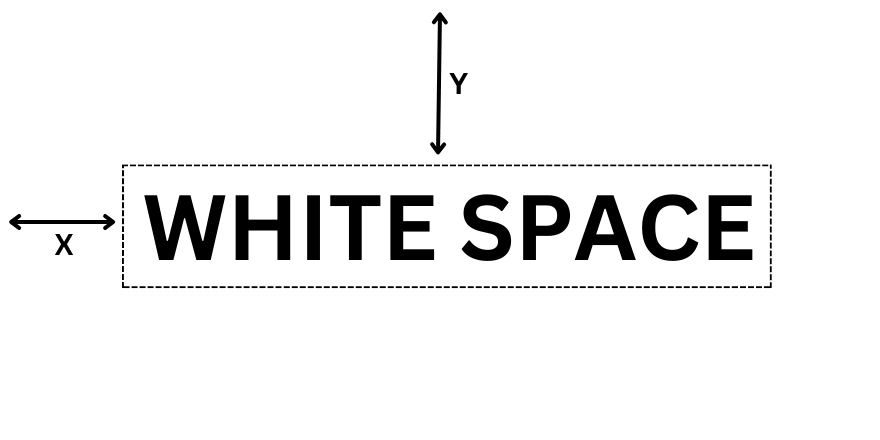
What is white space in website design?
Now we come to white space in user interface design. White space, also known as negative space, is highly important. Empty areas in a text are called white space or negative space. You should not use many different fonts and colors and overcrowd the text page. That quickly tires readers and makes the text unappealing. White space solves this problem and adds value to both the design and the text. It provides breathing room and keeps readers’ eyes from tiring as they read.
The principle of movement on a website
Another topic is the principle of movement in design. Movement refers to the path the eye follows through a particular design. An important element should guide the eye toward the next elements. Movement therefore plays an important role in the text and must be used properly.
Creating variety in website user interface design
Now it is time to discuss variety in UI design. Variety is important for making text attractive. It removes monotony and thus prevents audience fatigue. There are various ways to create variety easily, including colors, images, shapes, and other elements.
Cohesion and unity in design
Unity is the final aspect of UI design discussed here. It refers to how the various elements of a design work together. Unity also creates clear relationships between concepts. A text with good unity is high-quality, more organized, and gives the impression of a strong website design.
With all these principles in mind, you can begin creating a highly professional UI design and easily attract your audience’s attention and satisfaction.
User interface design principles
In UI design, and of course UX design, you must consider other important points in addition to the main design principles. These will help you create a highly professional website without flaws. Several essential principles can help you design a website with highly appealing text that easily attracts the audience’s attention. These basic principles include the following:
- Simple design is the best principle in user interface design. Using too many elements and placing them in the text distracts and tires readers. A simple, clean design is therefore very effective and makes the text more attractive. The design should be straightforward so that visitors can get what they want from the page and solve their problem.
- Consistency is a fundamental design principle. Fonts, sizes, and other elements in a design should be uniform and consistent. This prevents audience eye fatigue and encourages visitors to keep reading the website with greater interest and enthusiasm.
- The design should be highly compatible with mobile devices as well as computers. Mobile phone use is widespread today, and phones and tablets usually account for most website visits. The design must therefore work well on mobile devices so that anyone can access the website at any time. Otherwise, the design will fail and will not perform well.
- Using an appropriate color palette and suitable images is an important principle in website SEO that attracts many users’ attention. A strong, suitable color combination can produce a strong design and highly professional website SEO.
- The website should load quickly and easily. The interface should be designed so that the website loads rapidly on computers and smartphones. Long loading times tire users and make them lose interest in the website.
- Easy navigation is an important principle, and the website should follow the three-click rule. With this method, users can reach the information they need in three clicks along a short path.
- Communication is the final important UI design principle. Every user visits a website seeking the information they need. If the website and its design communicate effectively, audiences spend more time there and return more often, and the number of visitors also increases.
By keeping these seven fundamental UI design principles in mind, you can complete your design as effectively as possible and improve its response by creating an excellent, professional website.
How much does user interface design cost?
Different websites are designed every day, each created as effectively as possible by experienced professionals who follow all the essential principles. People can visit these sites to meet their needs and obtain the information they require. UI design demands great precision and attention to detail. To design a website, you must learn it thoroughly and then carry out this important activity correctly.
Many people have sufficient expertise and skills in this field, and you can entrust them with your work to receive a complete, flawless website. Many people in different fields delegate their website design to specialists with thorough expertise. These specialists charge different fees according to current rates, the features of the planned site, and the type of website the client requests. For example, one client may request a site that achieves exceptionally rapid growth and high traffic in the shortest possible time, while another may want an ordinary website. The costs will differ in either case.
Overall, however, a highly professional user interface can be designed and presented to users at a reasonable cost. UI design is thriving today, and its importance grows daily as technology advances. It is therefore necessary to understand sound website design methods and follow them to create a professional design, delivering it to audiences and users at a reasonable, acceptable cost.