



The main benefits of multilingual website design
Multilingual website design is, in fact, the best and most effective solution for international businesses. With a professional, up-to-date multilingual website, you can easily communicate not only with your domestic target market but also effectively and extensively with audiences around the world, ultimately introducing your products and services to them.
One very important principle in digital marketing is a business’s circle of communication with its target audience. Put simply, the wider and more effective this circle is, the greater the business’s chance of achieving more sales and profit.
Reaching global markets with a multilingual website
One of the greatest benefits of well-planned, professional multilingual website design is easy, hassle-free access to global markets. If your business is able to communicate with audiences in other parts of the world, you should create a multilingual website so that, through Google, you can introduce yourself to your target audience in other countries. Access to large foreign markets can enable you to earn income in dollars.

Increasing conversion rates and organic traffic
For local audiences, a multilingual website actually signals a business’s credibility and approval. A multilingual site can also increase visits and traffic several dozen times over. For example, when target audiences with different native languages visit your website, they will leave immediately if they realize it is not in their native language. This alone has a substantial effect on reducing your website traffic.
Principles of multilingual website design
Since languages such as English, Arabic, and Spanish are widely used around the world, having a multilingual website that lists these languages can greatly help online businesses grow and develop. When designing a multilingual website and following its principles, always prioritize common, popular languages in your website’s menu list.
Define your website design goals
One of the most important principles of multilingual website design is to define the business’s objectives for this type of website before doing anything else. To develop a professional strategy, you must first identify the business’s primary and even secondary goals. For example, decide from the outset which languages you want in the website menu. Factors such as your audience’s geographical location and the business’s budget affect the language-selection process.
Choose a suitable website domain
After selecting the target languages, another important principle of multilingual website design is choosing the appropriate design approach. Generally, multilingual websites are built in two ways:
- Using a main-domain and subdomain approach
- Using separate domains
Each approach has its own benefits and features, but in general the first is better and more complete for multilingual website design. Its advantage over the second approach is the ability to create a separate website on a separate subdomain for different languages. In addition, this approach lets you use a distinct, separate theme and structure for the target languages.
Choose a content management system (CMS) suited to the website’s structure
A content management system is one of the most important and widely used components of both single-language and multilingual websites. Choosing the best and most suitable CMS for a multilingual website has a significant effect on improving its user experience.
In general, two content management systems are recognized as the most widely used and best CMS options:
- WordPress content management system
- Joomla content management system
The main difference between these systems is that Joomla has built-in options specifically for multilingual website design, whereas WordPress requires plugins for use in multilingual website design.
To use the WordPress content management system, plugins such as Polylang, WPML, and Weglot must also be used.
Place a target-language selection menu on the multilingual website
One of the most important tasks in multilingual website design is adding a dedicated area where users can select their target language. This is essential: users can easily go to this section, select their preferred language, and search the site for the products and services they want. On many well-known, reputable multilingual websites, the language-selection menu is placed on the right-hand side of the homepage.

Provide a dedicated layout for left-to-right languages
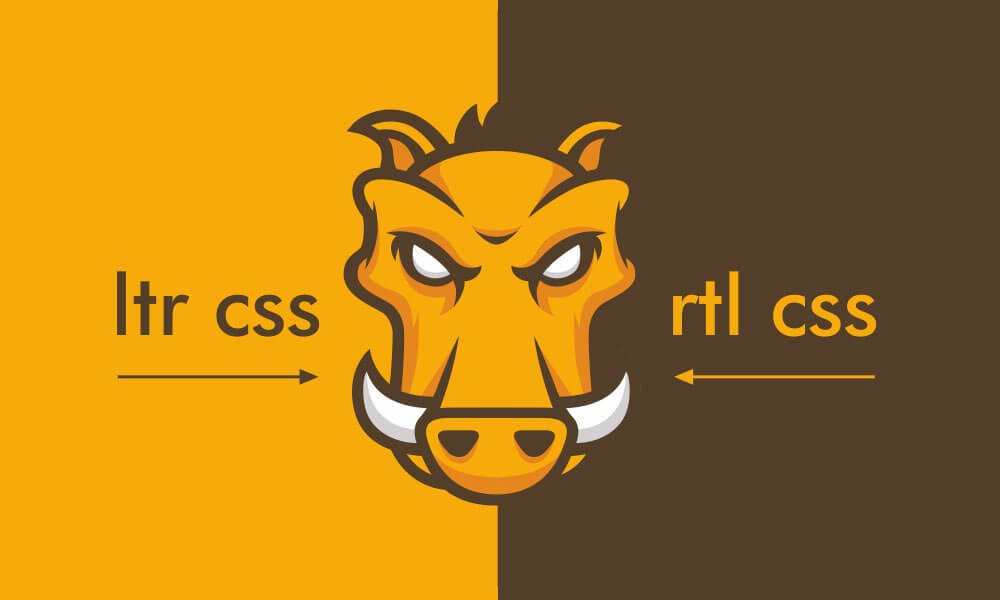
One of the most irritating common problems on multilingual websites is that different languages are not positioned correctly. The main reason is a failure to account for suitable design for left-to-right or right-to-left languages. Persian websites use a right-to-left (RTL) direction, whereas English websites use a left-to-right direction. The website’s theme must therefore also be designed to accommodate LTR languages.
Plugins such as Weglot support both RTL and LTR languages. Besides using these plugins, you can improve the layout of a multilingual website by following CSS rules. For example, after adding a left-to-right (LTR) language, you can use Weglot to customize how it is displayed correctly.
Use suitable color combinations in different website sections
Another important principle of multilingual website design that receives little attention is using suitable color combinations in the site’s theme. Appropriate combinations significantly increase a multilingual website’s visual appeal and can easily attract the user’s attention at first glance. However professional and specialized a website’s technical structure is, it cannot attract audiences as it should if it lacks desirable visual features such as suitable color combinations and a good theme.
Make the multilingual website responsive
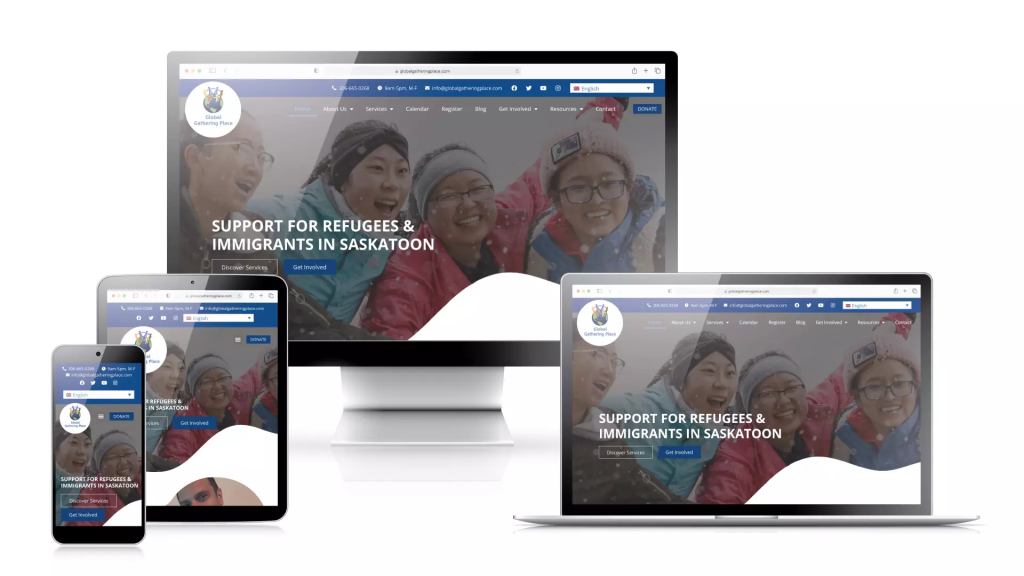
A key characteristic of multilingual website design is attention to responsiveness. Responsiveness means that a website’s theme and internal layout offer the greatest possible compatibility with any operating system, including Windows and Android. This responsiveness and compatibility with different operating systems explain the popularity of, and users’ complete satisfaction with, certain single-language and multilingual websites.
Website responsiveness is also very important to Google, whose algorithms pay considerable attention to responsive websites. Observing this point alone when designing multilingual websites can improve your chances of reaching top positions in Google.
Professional, specialized multilingual website design services at Disaan Digital Marketing
With an outstanding and exemplary track record across various areas of digital marketing, Disaan Digital Marketing has consistently been among the country’s most reputable providers of online marketing services. At Disaan, multilingual websites of various types are designed in the shortest possible time by experienced, capable specialists. Our main goal at Disaan Digital Marketing is to create suitable, effective opportunities on online platforms such as Google to help businesses grow and develop more successfully.