


As content creators, we are almost programmed to keep producing new content. But there is a real benefit to pausing that mindset and revisiting some of the content you have already written—and probably forgotten about. You do not always have to reinvent the wheel to move your content strategy forward. In this article, I share how updating old content can actually increase your website’s organic traffic, improve your SEO and help you achieve your marketing goals faster.
What is content updating?
Your website is a living entity. Every update you make is like giving it a fresh breath of life, helping it interact better with website visitors, customers and search engines such as Google.
Conversely, a stagnant website with no updates of any kind may be regarded by search engines as a dead entity with nothing new to offer.
Fortunately, updating a website tells search engines that it is a home for fresh content and new information resources provided in response to internet users’ requests. Put simply, if you frequently update your website with quality content, search engines will love you for it.
You can update content through the following actions:
- You do not need to revise all the content on a page. Often, adding new statistics or data relevant to today will do the job.
- Prepare a new graphic design for the content.
- You have probably become more knowledgeable about the subject you created content for, and Google loves expertise, so write a few additional paragraphs.
- Check whether your data sources are still accurate and link to newer data sources.
- Embedding a relevant video within content you have published can contribute to a content update.
Ultimately, there are many options for updating content, but often you only need small quality improvements to give it new life.
How can you tell that content has been updated?
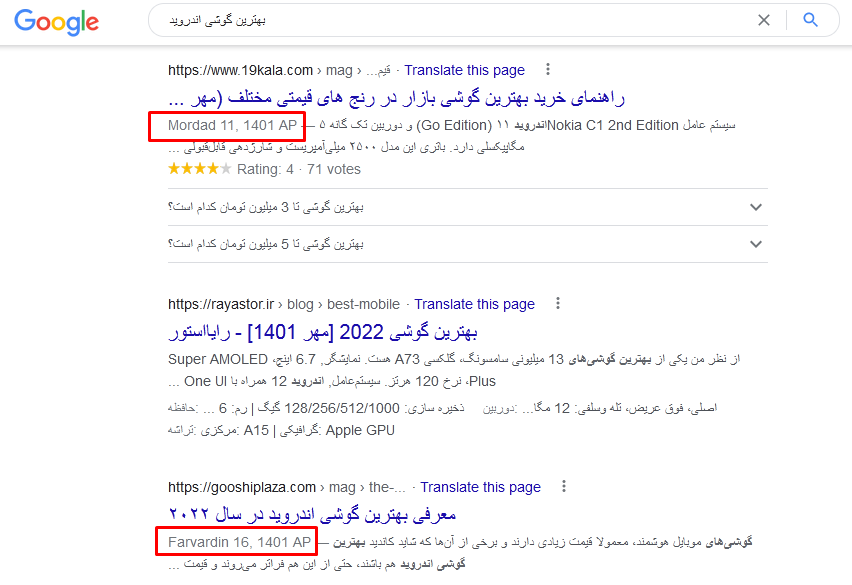
As noted, Google likes fresh content, and one factor in the rapid growth of your website’s ranking is changing the content’s publication date to today.
Changing a blog post’s publication date also changes its publication date in Google and tells people that the content is fresher. This brings more people to your website from the search engine results page.
Would you click a link published two years ago, or would you prefer one with new, relevant information?
Why should you update your website content?
When determining a page’s ranking in search results, Google’s algorithm looks at whether the page is updated or current. When content is first published, it naturally appears fresh, but its freshness diminishes over time.
Updating website content shows Google that the page’s content is still relevant and useful. Updated content also provides a better experience for your audience.
However, simply adjusting blog controls to change a publication date or adding a new heading to a landing page will not deliver the results you want; those steps are not enough. Changes to important parts of a page, such as the main body text, signal freshness to search engines more strongly than minor changes – so updates must be substantial enough to make an impact.
Nevertheless, updating old content has many benefits, some of which we discuss below:
Improving your website’s SEO standing
You probably know that content loses value over time. Search engines are designed to find content that gives users the most accurate and useful information. Relevant, fresh content is prioritized, while older content gradually loses its place in the rankings. Over time, this can have a major negative impact on your SEO efforts. Revisiting and updating old content shows search engines that it is up to date, accurate and still relevant. In addition, most search engines frequently change their algorithms. Updating your website content allows you to account for changes in search engine algorithms that might harm your work or help improve your search engine ranking.
Increasing audience engagement
Put yourself in your target audience’s shoes. Do you enjoy reading old, outdated material? Of course not. Fresh content with the latest information can engage readers and increase the time they spend on your website.
Saving time and achieving better results
Put simply, revising an old article takes much less time than writing a new one. In other words, you do not need to stop creating content altogether, but allocating time to both approaches has the potential to deliver better results with much less work.
What types of content should be updated?
In general, all content on your website can benefit from regular review and updates. This includes:
- The homepage
- The About Us page
- Product or service landing pages
- The blog
And any other part of the website whose content needs to change and be updated as science, news and technology develop around the world.

How often should you update your website content?
There is no precise, definite answer to this question. It really depends on the type of content and how often you can review it to identify problems and shortcomings.
However, important website pages such as the homepage and About Us page can benefit from updates every six months or more. Other content, such as evergreen articles and landing pages, should be updated regularly to ensure it remains useful and informative.
To establish a regular workflow for updating content, consider the following and use them as a checklist when reviewing each piece:
- Determine the reader’s purpose in reading your content. Does its message directly match what readers are looking for when they search for that phrase?
- Assess how appealing the headline is compared with competing articles. How can you improve your headline to make it more noticeable?
- Update graphic design and other visual elements that no longer match your brand’s design guidelines.
- Check all internal and external links to ensure the content you link to is current and accurate. Fix any broken links.
- Identify formats for updating on-page SEO elements such as meta descriptions and image alt text.
- Review grammatical errors and writing style. When it comes to writing, there is no right or wrong—be flexible—but your aim should be a consistent brand voice across all your content.
Also, considering your website’s Google ranking, content loading speed and website visitors’ experiences can provide useful information for deciding how to update your website.

Some important warning signs to address immediately in your website content updating process include:
- Your website is old, more than three years have passed since it was designed, and it has not changed
- The website content does not display well on mobile phones and tablets
- Your website has dead links
- Making changes or updates to your website is complicated
- Your website looks older than your competitors’ websites

Tips for updating website content
Add 200 words or more to the existing text: Regardless of the type of content you are updating, adding new text is an easy way to keep it fresh. If you do not want to make the content too long by adding 200 words to the existing text, you can also completely revise the old article by creating new content.
Review your keywords: The phrases people search for online change over time, so it is a good idea to do some research and make sure your content is still SEO-optimized for the right keywords.
Make sure the content is useful: Above all, your website content should be useful and relevant to your audience. With this in mind, the most important point is to make sure your content remains useful and valuable, which also helps your rankings.
For example, if you are a company supplying cake mix, a birthday cake recipe is valuable content relevant to your audience. An article about choosing a birthday design or theme, on the other hand, would not be suitable content for your website.
Do not forget new content: Producing new content regularly is still important and should be part of your overall content marketing strategy.
Promote updated content on social media: Once your article has been republished, promote it on your social media accounts. This helps bring new visitors to the content and improve its ranking.
Be consistent in updating content: Updating old content can be time-consuming, especially if your website has been available to audiences for a long time. It is better to plan to work on this project consistently rather than try to finish it all at once.

Why does updating content help SEO?
We can all guess some of the initial SEO benefits of updating content. When you update content and make it more appealing in quality, you will receive more traffic from search engines.
You will also move higher in the rankings on search engine results pages (SERPs). Naturally, higher rankings lead to more traffic. However, this is not the only benefit of updating content.
As you rise on search engine results pages (SERPs), internet users can find your content more easily. Another benefit is that this generates more backlinks for you. Backlinks are, in fact, a key component in improving your domain authority. You can check your domain authority through Semrush.
Meanwhile, one of Google’s important algorithms is known as EAT, an abbreviation of the following three words:
- Experience and expertise (Expertise)
- Authority
- Trustworthiness
Improving your ranking on the results page (SERP) directly helps two EAT factors: authority and trust. Backlinks will increase your domain’s authority, and numerous backlinks show Google that people trust your site. Again, you can check your domain authority through Semrush.
Final thoughts
As an advertising agency, we often look for quick wins that have a major impact on a company’s overall growth. Updating content is one of those low-effort strategies that delivers a guaranteed impact, leading to more traffic and, consequently, more sales.
Keeping a website up to date takes time, but the results are worth it. Your audience will appreciate the value you provide, and you will receive a good return in website SEO for every piece of content you create.