


What is the Business Model Canvas?
The business canvas is a strategic concept in business and economics that refers to the scope and extent of a company’s or industry’s commercial activities in a particular region. This concept describes a geographical area or market in which businesses operate, encompassing local, regional or even international markets.
The business canvas is not limited to mechanical and geographical dimensions; economic, social, cultural and political factors also play a role in its formation. In general, business managers and strategic decision-makers, such as SEO consultants or advertising campaign managers, can make the best decisions for the development, growth and success of companies and organizations by accurately analyzing and understanding the business canvas.
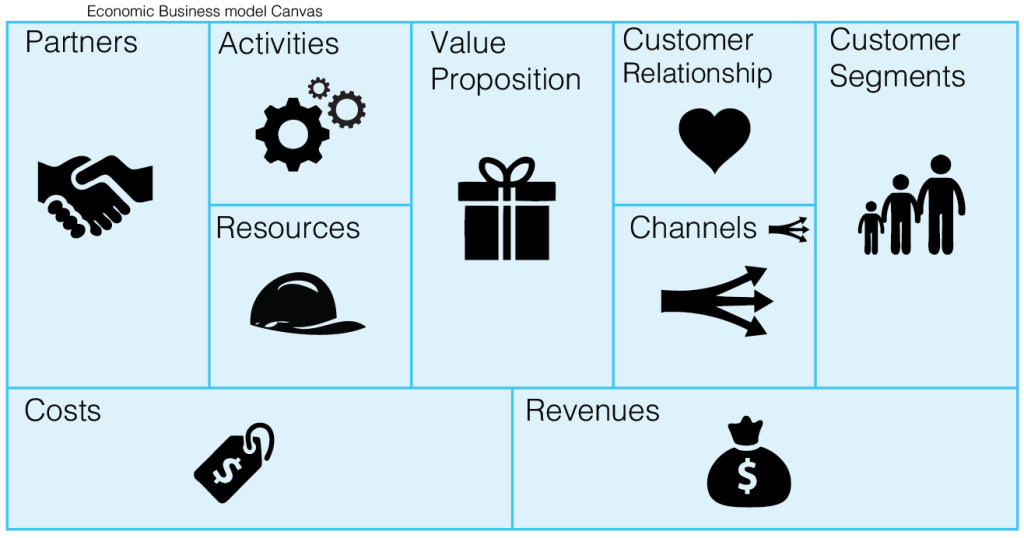
Important components of the business canvas
To analyze the business canvas more effectively, it can be divided into different components. Below are its important components:
- Target market
- Value proposition
- Competitiveness
- Efficiency and performance
- Management
- Marketing and sales
- Technology and innovation
- Legal support and regulations
The target market in the business canvas
Understanding the target audience and customers for your products or services is very important. Identifying their needs and problems helps you offer products or services that properly meet their requirements. One of a branding agency’s main areas of expertise is understanding the target market and its needs precisely. This is why we recommend preparing your business canvas in collaboration with a professional marketing and branding agency.
Value proposition
This component includes an accurate description of your products or services and how they differ from competitors’ offerings. You should demonstrate how your products or services can provide added value to customers and why they are a better choice than other options.
Competitiveness
Another component of the Business Model Canvas is competitiveness. Researching the market and understanding competitors is very important. You need to know who operates in your field, how they offer their products or services, and how you can stand out while competing with them.
Efficiency and performance
This component covers your business’s operational performance, optimal use of resources, waste reduction and process improvement. High efficiency helps reduce costs, increase quality and improve service delivery.
Management in the business canvas
Effective management of the team and of human, financial and technical resources is very important. Sound decision-making, allocating responsibilities, developing team members and managing risks are essential elements of this component.
Marketing and sales
Marketing strategies to attract customers, communicate with them and sell products or services to people who need them are very important in the business canvas.
Technology and innovation
Using appropriate technology and innovating in your business’s products, services or processes helps you move ahead of competitors and develop more advanced solutions.
Legal support and regulations
Understanding laws and regulations relevant to your field, protecting intellectual property, addressing tax matters and considering other legal aspects are important components.

Types of business canvas models
As noted, business models (the business canvas) are sets of strategies, structures and approaches that a business uses to create value, distribute products or services and generate profit. These models can vary according to factors such as the type of business activity, organizational structure and innovation. Below are some types of business canvas models:
- Product-based business model
- Service-based business model
- Retail business model
- Subscription business model
- Advertising business model
- Freemium business model
- Content creation business model
- A sports club business canvas, and others
What are the benefits of the business canvas?
The Business Model Canvas is a visual tool introduced by Alexander Osterwalder and contains nine key elements for describing a business model. Below you can see the benefits of using the Business Model Canvas, which we also explain.
- Visualizing the business
- Clarifying and separating elements
- Internal communication and collaboration
- Analyzing and improving the business model
- Presenting the rationale to investors and collaborators
Visualizing the business
The Business Model Canvas helps companies visually display the overall structure of their business model. This helps all team and company members gain a better understanding of every aspect of the business.
Clarifying and separating elements
Using the different elements of the Business Model Canvas, such as customers, key resources and channels, allows you to analyze all aspects of your business separately.
Internal communication and collaboration
Using the Business Model Canvas gives all members of a team a more complete picture of how the business works. This helps teams collaborate more effectively and achieve the company’s overall goals.
Analyzing and improving the business model
With a complete picture of all aspects of the business, you can readily identify your strengths and weaknesses. This helps keep you on a path of growth and continuous improvement.
Presenting the rationale to investors and collaborators
When you need to attract investors or work with new collaborators, the Business Model Canvas helps as a tool for explanation and justification. You can easily show others how your business works and how it generates profit.
Overall, using the Business Model Canvas helps you present all important aspects of your business in a more comprehensive, clearer view and use this analysis to improve performance. To do better in this area and help your business thrive, you can also contact a branding agency for the guidance you need.
Conclusion
The local business model, or Business Model Canvas, generally refers to the structure and method a company or organization uses to create, deliver and convert value for its customers. This model usually describes the various stages through to delivering a product or service to the customer, along with resources, activities, collaborators, key partners, cost structure and revenue.